From Images to Video: How AI Tools Transform Content
AI is reshaping video production by automating dubbing, translation, and content creation. Explore how modern AI tools help businesses create engaging multilingual videos with less time and effort.
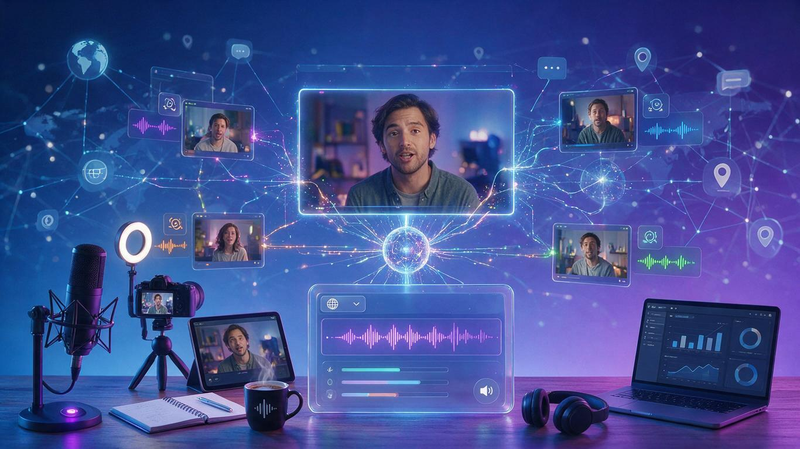
Content creation used to be a linear process. You'd shoot a video, edit it, record a voiceover, and publish. If you wanted to reach an international audience, you'd start the whole process over again in a different language. But AI tools have completely changed this workflow — and at the center of that change is AI video dubbing.
For anyone who works with visual content — whether you're a photographer, a product designer, or a social media manager — the ability to turn static images into dynamic, multilingual video content is a game-changer. You no longer need a film crew, a recording studio, or a team of translators to produce professional video content for global audiences.
In this article, we'll explore how AI video dubbing and related tools are transforming the content creation pipeline, making it faster, cheaper, and more accessible than ever before.
The AI Content Creation Pipeline
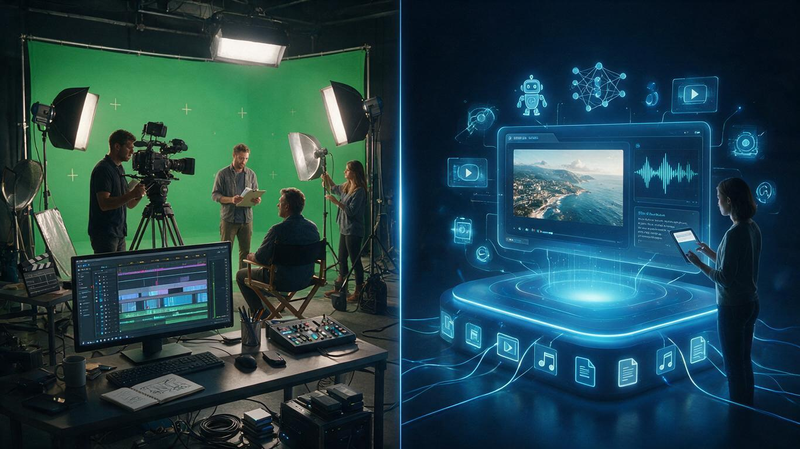
The traditional content creation pipeline was expensive and time-consuming. Here's how it used to work:
- Step 1: Plan and shoot video content (requires equipment, crew, and time)
- Step 2: Edit the footage (requires software and skill)
- Step 3: Record voiceover in one language (requires a voice actor)
- Step 4: Translate and re-record for other languages (requires multiple voice actors)
- Step 5: Publish and distribute
This technology collapses steps 3 and 4 into a single automated process. Instead of hiring voice actors for each language, you upload your video once, and the AI handles the rest — translating the audio, generating new voice tracks, and even synchronizing lip movements to match the new language.
Here's what the new pipeline looks like:
- Step 1: Create your visual content (even from static images)
- Step 2: Add AI-generated voiceover in your primary language
- Step 3: Run AI video dubbing to generate versions in multiple languages
- Step 4: Publish globally
The time savings are enormous. What used to take weeks of production can now be done in hours. And the quality? The dubbing technology has improved to the point where many viewers can't tell the difference between AI-generated and human-recorded voiceovers.
Reaching Global Audiences with Dubbing
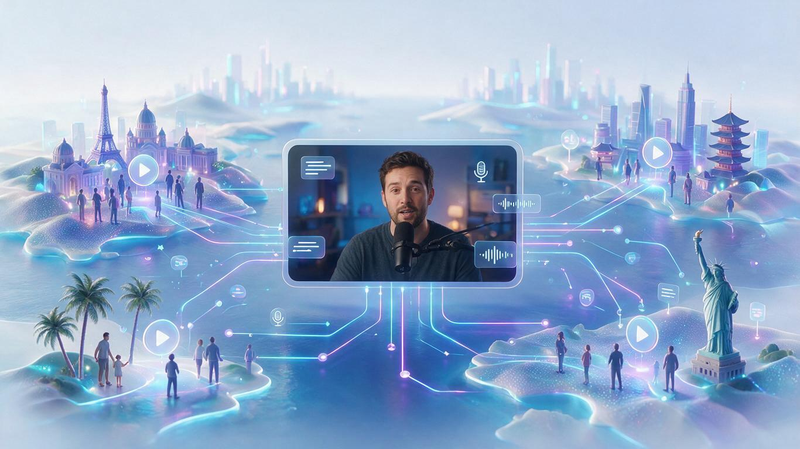
One of the biggest advantages of AI video dubbing is its ability to help creators reach audiences they couldn't access before. If you create content in English, you're automatically limited to the roughly 1.5 billion English speakers worldwide. But with AI video dubbing, that same content can be instantly available in Spanish, Mandarin, Hindi, Arabic, and dozens of other languages.
Here's why this matters:
- Exponential audience growth. A single video dubbed into 10 languages can reach 5+ billion potential viewers instead of 1.5 billion.
- Cultural relevance. AI video dubbing doesn't just translate words — it adapts tone, pacing, and even humor to feel natural in each target language.
- SEO benefits. Multilingual video content ranks in search results across different regions, driving organic traffic from markets you'd otherwise miss.
The technology behind AI video dubbing is surprisingly sophisticated. It doesn't just do a literal translation — it analyzes the context of each scene, matches the emotional tone of the original performance, and adjusts the voice to fit the character or presenter on screen. Tools like AI video dubbing make this process accessible to anyone, regardless of technical expertise.
For creators who already produce image-based content, this opens up an entirely new distribution channel. That product photo, infographic, or illustration can now become a narrated video — and that narrated video can become a multilingual asset that works for audiences around the world.
From Static Images to Dynamic Product Videos
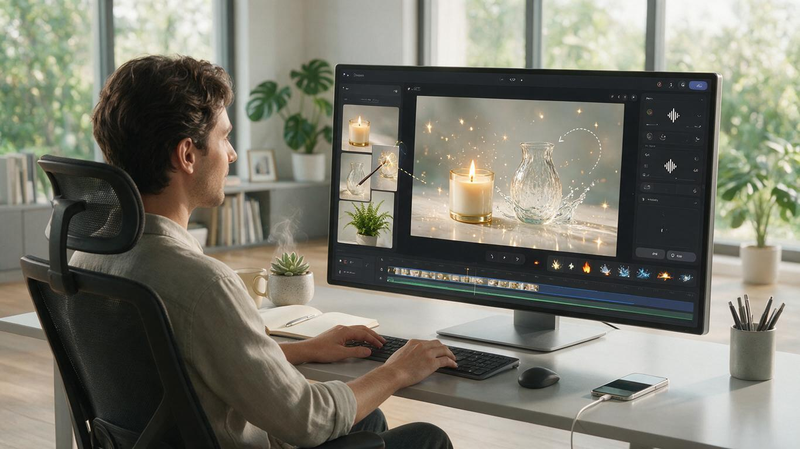
Here's where things get really interesting. AI tools aren't just dubbing existing videos — they're creating videos from scratch, starting with nothing more than a static image. This is particularly valuable for e-commerce and product marketing.
Consider a typical product launch. You have product photos, a features list, and a target audience. Traditionally, turning those assets into a promotional video required a videographer, a scriptwriter, and an editor. Now, AI tools can handle the entire process:
- Image to video. AI animates static product images, adding motion, transitions, and effects that make them look professionally shot. Once the video is created, creators can also upscale video with AI using invideo Agent to improve its resolution and visual quality, making the final content more suitable for social media, advertising campaigns, and international marketing.
- Script to narration. AI converts product descriptions, feature lists, or marketing copy into natural-sounding narration that perfectly matches the video. This eliminates the need to manually script and record voiceovers, allowing brands to produce polished product videos in minutes instead of days.
- Multi-language export. Once the video is complete, AI automatically creates localized versions with translated narration, subtitles, and language-specific audio. Brands can publish the same product video across multiple markets without rebuilding their creative assets, making international product launches faster and far more cost-effective.
A product video generator can take a single product image and turn it into a polished promotional video complete with narration, music, and dynamic visuals. Pair that with AI video dubbing, and you've got a complete global marketing asset — all from one photo and a few lines of text.
This is a fundamental shift in how content is created. Instead of starting with a video and figuring out how to distribute it, you start with an asset you already have (an image) and use AI to build the video around it. The content creation pipeline runs in reverse — from output back to source — and it's infinitely more efficient.
Frequently Asked Questions
What is AI video dubbing?
AI video dubbing is the process of using artificial intelligence to replace the audio track of a video with a translated version in another language. The AI translates the original dialogue, generates a natural-sounding voiceover in the target language, and synchronizes it with the video — including lip movements when possible.
Can AI video dubbing handle different languages?
Yes. Modern AI video dubbing tools support dozens of languages, including major languages like English, Spanish, Mandarin, Hindi, Arabic, and French, as well as many regional languages. The quality varies by language, but the most popular languages produce results that are nearly indistinguishable from human dubbing.
How does a product video generator work?
A product video generator uses AI to create promotional videos from product images or descriptions. You upload a product photo, provide a short description, and the AI generates a video with animated visuals, text overlays, background music, and AI narration. Some tools can even create multiple language versions automatically.
Conclusion
The content creation landscape is shifting from a labor-intensive, sequential process to an AI-powered, parallel one. AI video dubbing eliminates the language barrier, product video generators eliminate the production barrier, and together they make it possible for anyone to create professional, multilingual video content from almost nothing.
Whether you're a solo creator, a small business owner, or part of a larger marketing team, these tools can dramatically reduce your production costs while expanding your reach. The question isn't whether to adopt them — it's how quickly you can integrate them into your workflow before your competitors do.